Reindeer in a Floral Wreath with Snowflakes: A Practical Guide for Creators
The Reindeer in a Floral Wreath with Snowflakes design has become a staple for winter projects, bridging the gap between rustic woodland aesthetics and elegant holiday decor. Whether you are creating custom apparel, designing greeting cards, or cutting vinyl decals for home decor, this specific motif offers a versatile balance of organic texture and seasonal symbolism. However, the popularity of this design often leads to rushed decisions regarding file selection and application. Many creators assume that any digital download will work universally across all platforms and materials, but the reality is far more nuanced. Understanding the technical specifications and practical limitations of this artwork is essential to avoiding wasted materials, poor print quality, and frustrating production delays.
Understanding the Design and Its Versatility
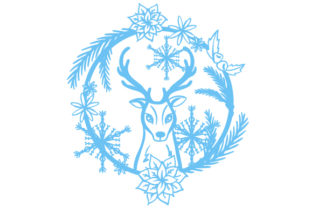
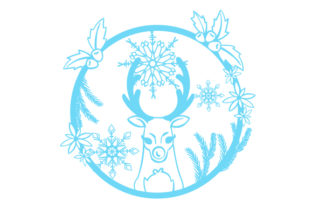
At its core, the Reindeer in a Floral Wreath with Snowflakes is a composite illustration that combines three distinct visual elements: the silhouette or detailed rendering of a reindeer, a circular arrangement of botanicals (often pine, eucalyptus, or berries), and scattered snowflake accents. This combination is popular because it serves as a complete frame on its own, making it ideal for monograms, family names, or central logos. People are drawn to this design for its ability to convey warmth and tradition without being overly cartoonish or religious, making it suitable for a broad commercial and personal audience.
For entrepreneurs and small business owners, this design is particularly valuable during the Q4 rush. It works exceptionally well on sweatshirts, tote bags, and wooden signs. However, the intricate nature of the floral wreath and the delicate lines of the snowflakes introduce complexity that simpler designs do not have. If you are new to digital crafting or printing, recognizing these complexities early will save you significant time and money.
Common File Format Misunderstandings
When you acquire this design, you typically receive it in four formats: SVG, PNG, EPS, and DXF. A frequent mistake is using the wrong format for your specific machine or software, leading to jagged edges, missing layers, or uncuttable files. Do not assume these formats are interchangeable.
- SVG (Scalable Vector Graphics): This is the gold standard for cutting machines like Cricut and Silhouette. A common error is opening an SVG in a basic photo viewer rather than design software. Photo viewers often rasterize the vector, destroying the cut lines. Always import SVGs directly into Canvas, Designer Edition, or Illustrator to maintain editable paths and separate color layers.
- PNG (Portable Network Graphics): You will receive this on a white background. Beginners often try to use this PNG for vinyl cutting, only to realize they cannot weed out the white interior spaces easily. The PNG is intended for sublimation, direct-to-garment printing, or digital mockups. If you must use the PNG for cutting, ensure you have reliable background removal tools, though starting with the SVG is always superior for physical crafts.
- DXF (Drawing Exchange Format): This format is crucial for users of the free version of Silhouette Studio, which does not support SVG imports. A major oversight is ignoring the DXF file entirely. Without it, free-tier users are forced to trace the PNG, resulting in inaccurate cut lines and lost detail in the reindeer’s antlers or the floral leaves.
- EPS (Encapsulated PostScript): Often overlooked by hobbyists, this format is vital for professional designers using Adobe Illustrator or CorelDRAW. It preserves high-resolution scalability for large-format printing like banners or window clings. Using an SVG for massive commercial signage can sometimes result in node errors; the EPS is generally safer for industrial applications.
Navigating Intricate Details and Material Limitations
The aesthetic appeal of the Reindeer in a Floral Wreath with Snowflakes lies in its detail, but that same detail is the primary cause of production failure. The snowflakes and floral stems often feature thin lines and small negative spaces. When working with adhesive vinyl or heat transfer vinyl (HTV), these areas are prone to tearing during weeding or failing to adhere during application.
A corrective approach involves evaluating your material before cutting. Standard glossy vinyl may be too rigid for the tiny snowflake accents within the wreath. Opting for a premium cast vinyl or a specialized HTV designed for intricate cuts can prevent lift-off issues after washing. Furthermore, consider the scale of your project. Shrinking this design down to fit a 2-inch sticker may render the floral elements unrecognizable and the snowflakes impossible to weed. Before committing to a full production run, perform a test cut at your intended final size. If the details are lost, simplify the design by removing the smallest snowflakes or thickening the floral stems in your vector software rather than forcing a complex design into an inadequate space.
Evaluating Quality Before Purchase or Download
Not all versions of this design are created equal. Whether you are buying from a marketplace or downloading a free resource, you must vet the file quality to avoid usability issues. Low-quality vectors often have excessive nodes, open paths, or overlapping shapes that confuse cutting software.
Before finalizing your decision, check the following:
- Node Count and Smoothness: Zoom in closely on the curves of the wreath and the reindeer’s profile. Jagged or pixelated edges indicate a poorly traced image rather than a true vector. This will result in stuttery cuts and rough edges on your finished product.
- Layer Organization: For multi-color projects, verify that the SVG is properly layered. A flattened single-layer file requires manual separation, which is tedious and error-prone. A well-designed file should have distinct color groups for the reindeer, the greenery, and the snowflakes.
- Licensing Clarity: For entrepreneurs and marketers, assuming personal use extends to commercial products is a costly legal risk. Explicitly confirm that the license covers physical end products. Digital resale or sharing of the raw Reindeer in a Floral Wreath with Snowflakes file is almost universally prohibited and unethical.
- Background Transparency: While the provided PNG has a white background, ensure it is a true high-resolution file (300 DPI minimum). Blurry previews often mask low-resolution source files that will print poorly on fabric or paper.
Optimizing Application for Professional Results
To maximize the impact of this design, consider the contrast and context of your application. The interplay between the reindeer and the floral elements requires adequate negative space to breathe. Placing this busy design on a patterned background or a highly textured surface can reduce legibility and visual appeal. Solid, neutral backgrounds typically allow the intricate snowflakes and botanical details to stand out effectively.
For educators and bloggers using this design in digital content, remember that accessibility matters. When uploading the PNG to a website or social media, use descriptive alt text such as "Winter holiday graphic featuring a reindeer silhouette inside a pine and berry wreath with falling snow." This improves SEO and ensures inclusivity. Additionally, when resizing for web, maintain the aspect ratio to prevent the reindeer from appearing stretched or squashed, which diminishes the professional quality of your presentation.
Ultimately, success with the Reindeer in a Floral Wreath with Snowflakes design comes down to respecting the technical requirements of your chosen medium. By selecting the correct file format, acknowledging the physical limitations of intricate cuts, and verifying quality before production, you transform a simple digital asset into a polished, professional result. Taking these extra steps ensures that your creative vision translates accurately from screen to substrate, providing satisfaction for both you and your audience.